Machine Learning (ML), a subset of artificial intelligence, is rapidly transforming industries and reshaping our world. It empowers computers to learn from data without explicit programming, allowing them to identify patterns, make predictions, and improve their performance over time. This isn’t just about futuristic robots; it’s about algorithms that power everything from personalized recommendations on your streaming service to sophisticated medical diagnoses. But what exactly is Machine Learning, and how does it work?
Key Takeaways
Machine Learning algorithms learn from data to improve accuracy and efficiency without explicit human instruction.
The global Machine Learning market is projected to experience explosive growth in the coming years.
Understanding the fundamental concepts of ML is crucial for navigating the evolving technological landscape.
Core Concepts of ML
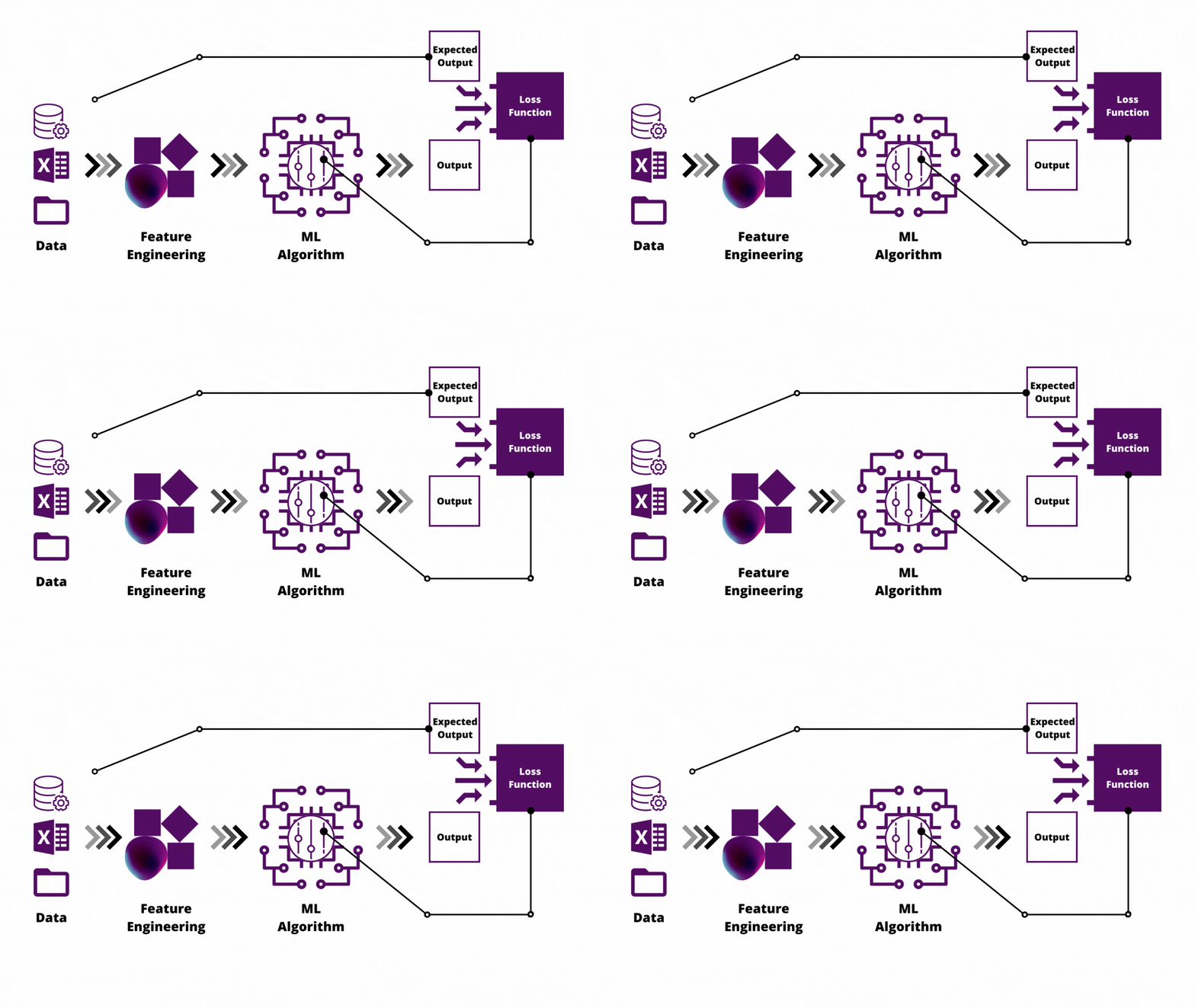
At its heart, Machine Learning involves feeding vast amounts of data into algorithms. These algorithms then use statistical techniques to identify patterns and relationships within the data. Think of it like teaching a child: you show them many examples (the data), and they gradually learn to recognize the common threads (the patterns). Based on our analysis, the most successful ML models are those that leverage high-quality, relevant data. This data-driven approach allows ML systems to make predictions or decisions without being explicitly programmed for each scenario. A key factor to consider is the type of algorithm chosen, as different algorithms suit different types of problems.
“The ability to learn without being explicitly programmed is what makes Machine Learning so revolutionary.”
Machine Learning (ML) Applications Across Industries
The applications of Machine Learning (ML) are vast and constantly expanding. From fraud detection in finance to personalized medicine in healthcare, ML is already impacting nearly every sector. Consider these actionable steps to understanding its impact: 1) Identify your industry’s data sources. 2) Determine which ML tasks could be automated. 3) Evaluate the available ML tools and resources. 4) Implement pilot projects to test the feasibility of ML solutions.
💡 Pro Tip: Start small! Focus on a specific problem within your organization where ML can deliver immediate value.
Conclusion
Machine Learning (ML) is no longer a futuristic concept; it’s a transformative technology driving innovation across countless industries. Understanding its core principles, potential applications, and limitations is crucial for navigating the rapidly evolving technological landscape. By mastering the fundamentals, businesses and individuals alike can harness the power of ML to solve complex problems and unlock new opportunities. The future is undeniably data-driven, and Machine Learning is at its forefront.